


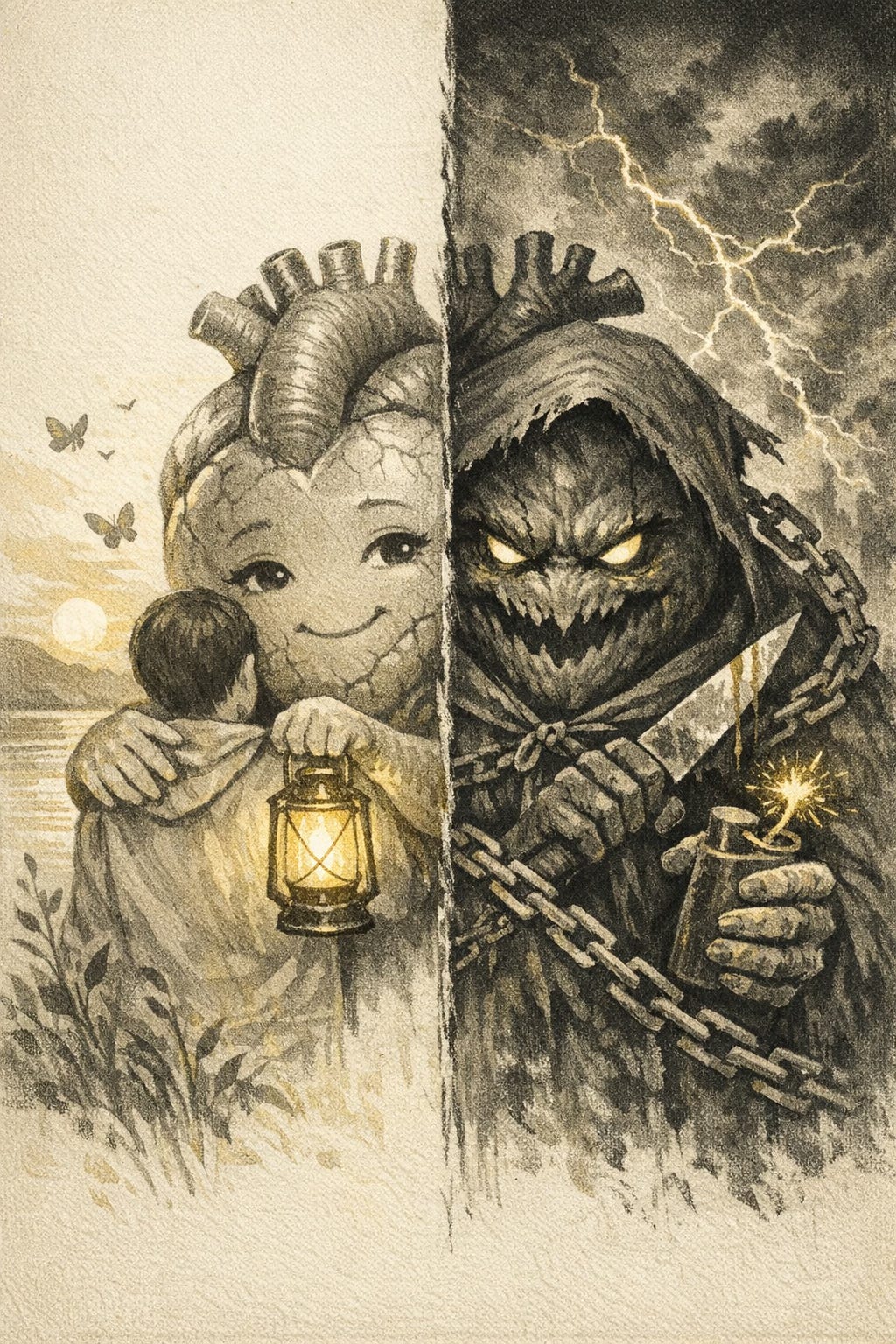
The heart can feel like a traitor and a refuge at the same time. If you’ve ever been stalled by feelings that make no practical sense, or found yourself replaying old hurts until they become a kind of comfort, you know the experience I’m talking about. This post gathers some thoughts on why the heart resists freedom, and what we can do about it.
The Heart as a Criminal to Our Wellbeing
The heart can sabotage growth. It has a way of softening memory, romanticising past pain, and turning trauma into a story we tell ourselves rather than a wound we heal. That process keeps us bound: we remember selectively, we justify emotion, and we stay stuck. The feelings feel valid, even righteous, and that very validity is often enough to stop us from changing course.
Inertia is the heart’s ally. Once the heart settles into a pattern of resistance, it relishes the safety of not moving. That safety is deceptive: it protects a fragile present at the cost of long-term freedom.
The Cost Is the Soul
Inaction has spiritual consequences. When we allow inertia to rule, we sacrifice deeper growth. There’s an image from the Mahabharat that reflects this sharply: Bhim warns Yudhishtir that failing to act now means the lesson will be deferred, and the soul will have to pay the price later—perhaps in a harder, repeated struggle. The cost of clinging to sentiment is not merely missed opportunity; it is a postponement of learning that makes future trials harsher.
Bhim’s Warning to Yudhishthir
“Everything we have worked so hard to achieve is now being threatened by your bewilderment. You seem to have lost your good sense. Surely you know right from wrong. Why are you hesitating to do your duty? You have never displayed such faintness of heart before, allowing yourself to be overpowered by sentiment. Have you forgotten the Kauravas’ sins? Have you forgotten the ills inflicted upon us and Draupadi? Do you not recall the miseries we endured in exile, awaiting this day? You have won one war. O King. Now you face an even greater battle the battle with your mind. If you expire before gaining victory in that fight, then you will have to take another birth and resume the battle until you win.”
This passage from the Mahabharata names the central conflict: the outer battle is completed, but leftover inner battle—over duty, clarity, and resolve—remains decisive.
Heart Versus Mind
We follow the heart, but we need the mind. Human beings are paradoxical: we prize the heart’s guidance, yet it is often the mind—the faculty of discernment, duty, and reason—that must pull us out of trouble. The heart’s intuition can be valuable, but it becomes a liability when it overrides responsibility, or keeps us clinging to what harms us.
A balanced view. Think of the heart as a sensor, and the mind as a steward. The heart signals what matters; the mind decides what to do about it. When the heart’s signal becomes a demand for stasis, the mind must act.
Some Practical Ways to Contend with Your Heart
Name the pattern.
Notice when memory is being softened or romanticised. Naming the tendency reduces its power.
Ask what duty requires.
Shift the question from “How do I feel?” to “What must I do?” Duty doesn’t have to be grand; it can be the small, steady action that moves you forward.
Create a short experiment.
Test a small change for a week. Action breaks inertia more reliably than argument.
Use the mind as a referee.
Let intuition speak, but let reason set the rules for action.
Accept discomfort as currency.
Growth often costs unease. If the heart resists because change is uncomfortable, treat the discomfort as payment for freedom.
Remember the long view.
The cost of inaction compounds. Choosing the harder right now can spare a harsher lesson later.
In Closing
The heart is not the enemy; it is a powerful part of us that can both guide and mislead. The task is not to silence it, but to contend with it—to listen, to test, and to let the mind and duty shape the path forward. When we do, we stop trading our soul’s progress for the temporary comfort of familiar pain.
Thank you for reading. I hope you found it enjoyable.